
Who We Serve
Walking you through your compliance requirements, especially meeting multiple regulatory mandates, is our specialty. Compliance preparation is a large undertaking that takes in-depth analysis, strategic planning, implementation, and continuous monitoring.
1ClickSecurity helps businesses prepare for CMMC assessments by identifying compliance gaps, strengthening security controls, organizing documentation, and supporting readiness for Cyber AB authorized C3PAO assessments. From SSP and POA&M support to secure enclave planning and evidence preparation, we help defense contractors build a clear path toward CMMC Level 2 readiness.
.
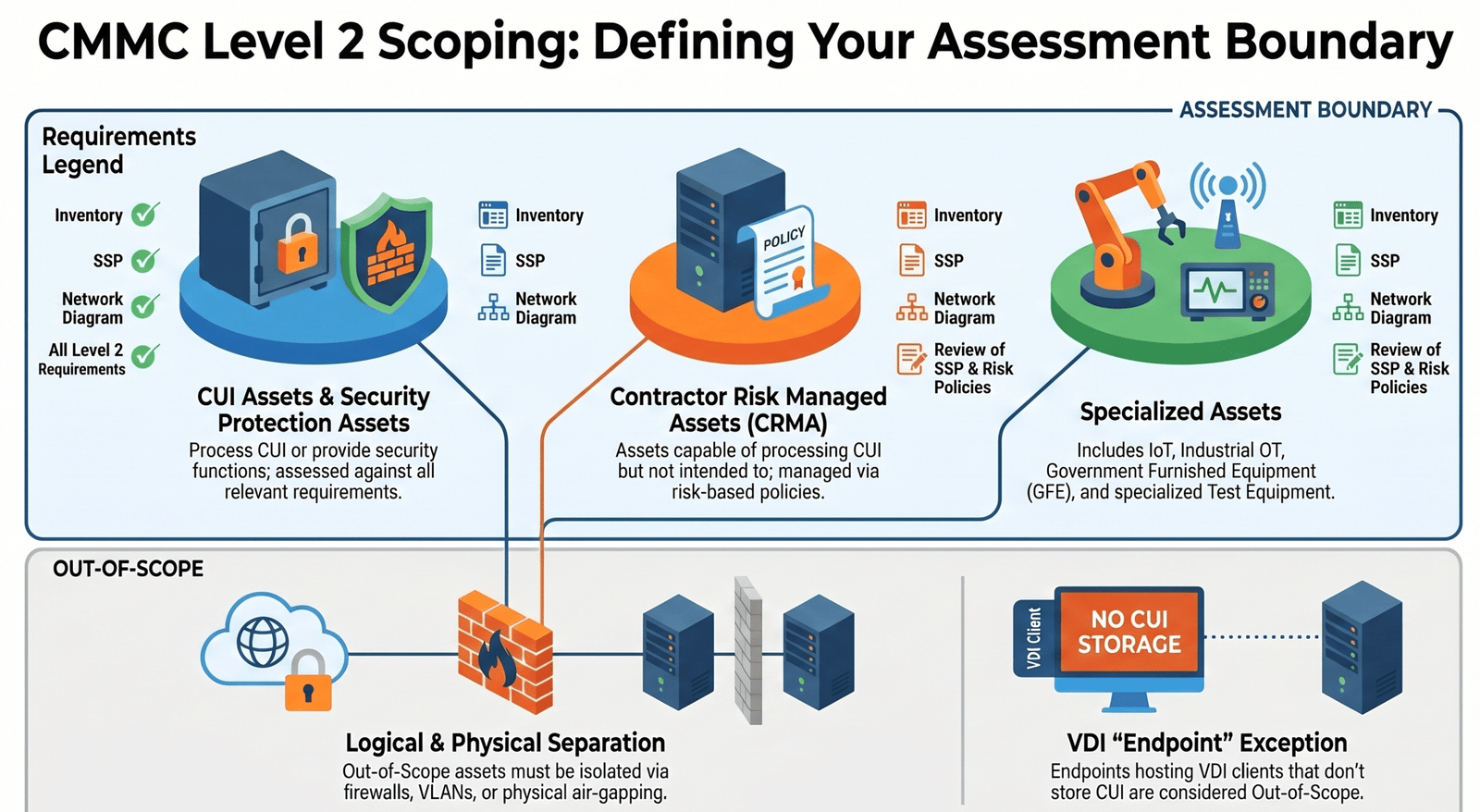
The first step in your CMMC gap analysis is defining exactly what is in scope. This means identifying where Controlled Unclassified Information (CUI) is stored, processed, or transmitted, which users interact with it, and which systems, devices, applications, and vendors support that environment. If scope is unclear, the gap analysis will be flawed from the start because you may either miss critical assets or waste time evaluating systems that are not relevant. A clear scope creates the foundation for everything that follows and helps your organization focus on the areas that matter most for CMMC assessment readiness.


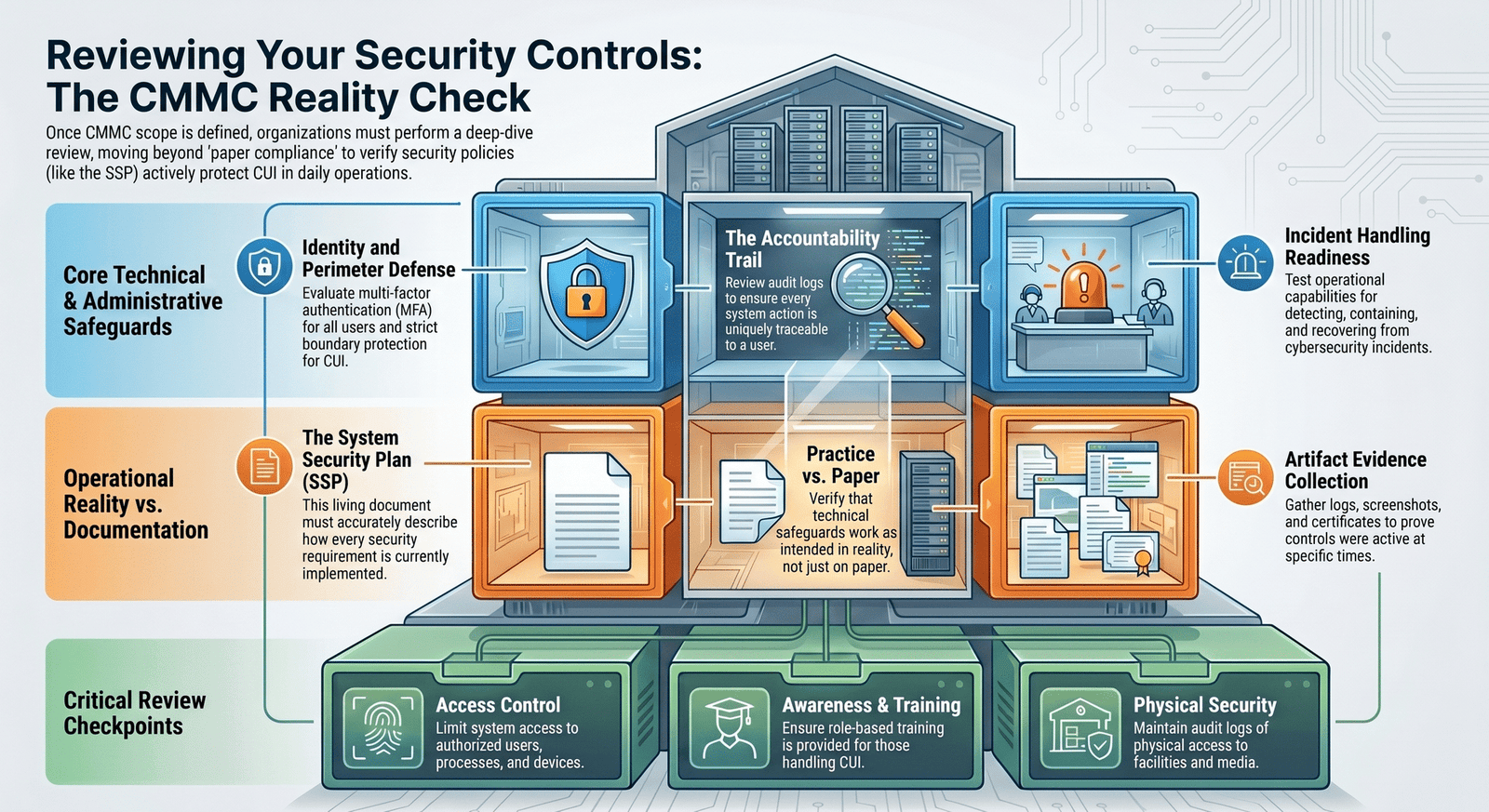
Once scope is defined, the next step is reviewing your existing security controls, policies, procedures, and technical safeguards against the applicable CMMC requirements. This includes looking at things like access control, multi-factor authentication, logging, incident response, endpoint protection, user training, and physical security, along with core documentation such as the System Security Plan (SSP) and existing policies. The goal here is to understand the current state of the environment as it actually operates, not just how it is supposed to work on paper. This step gives a realistic picture of what the company already has in place and where weaknesses may exist.
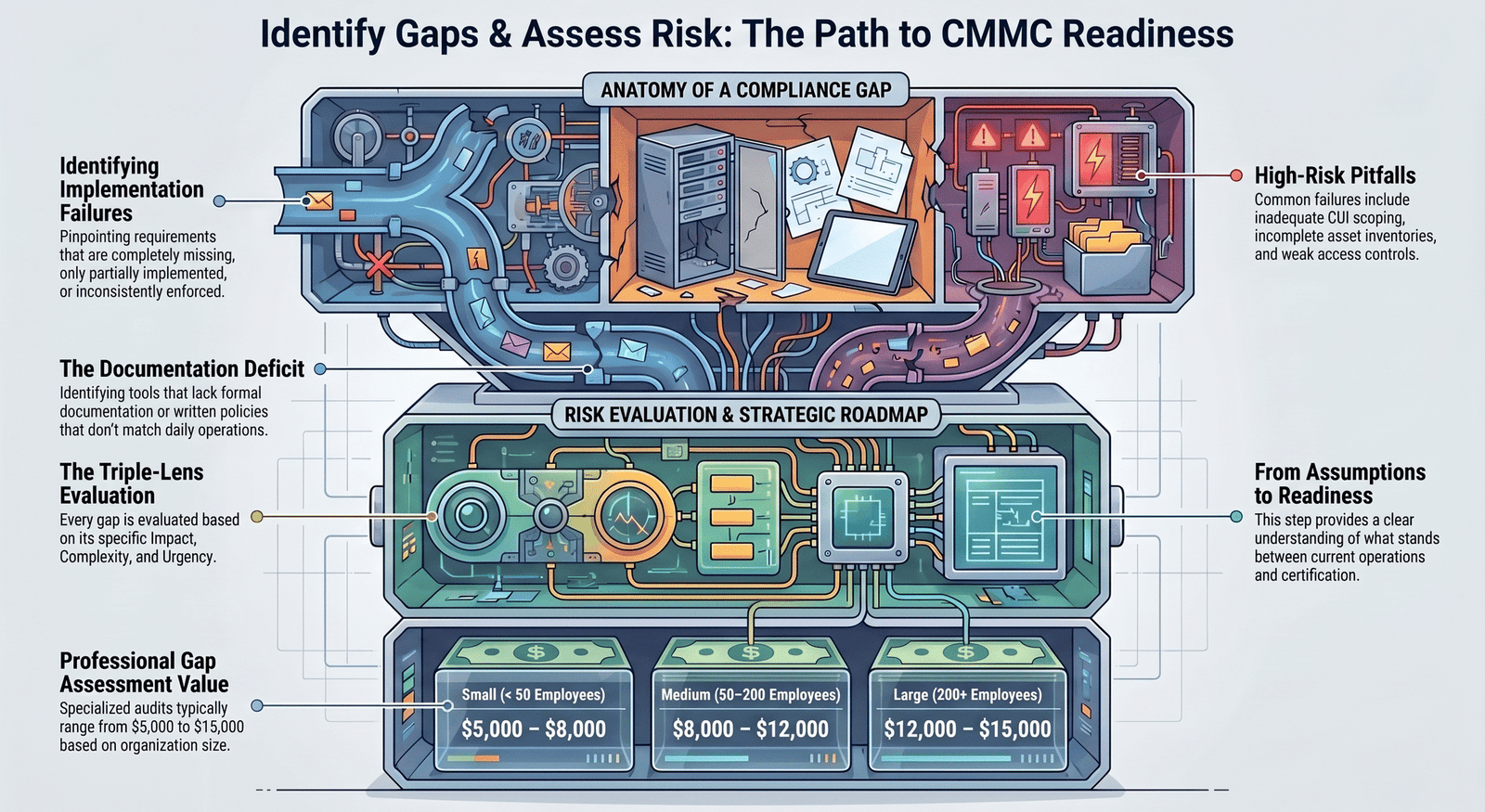
After reviewing the current environment, the next step is identifying where requirements are missing, only partially implemented, undocumented, or inconsistently enforced. These gaps can be technical, procedural, or administrative. For example, you may have security tools in place but lack formal documentation, or you may have written policies that do not match actual day-to-day operations. Each gap should be evaluated based on its impact, complexity, and urgency so your organization can separate high-risk issues from lower-priority improvements. This is the step where your organization moves from assumptions to a clear understanding of what stands between its current state and true CMMC readiness.
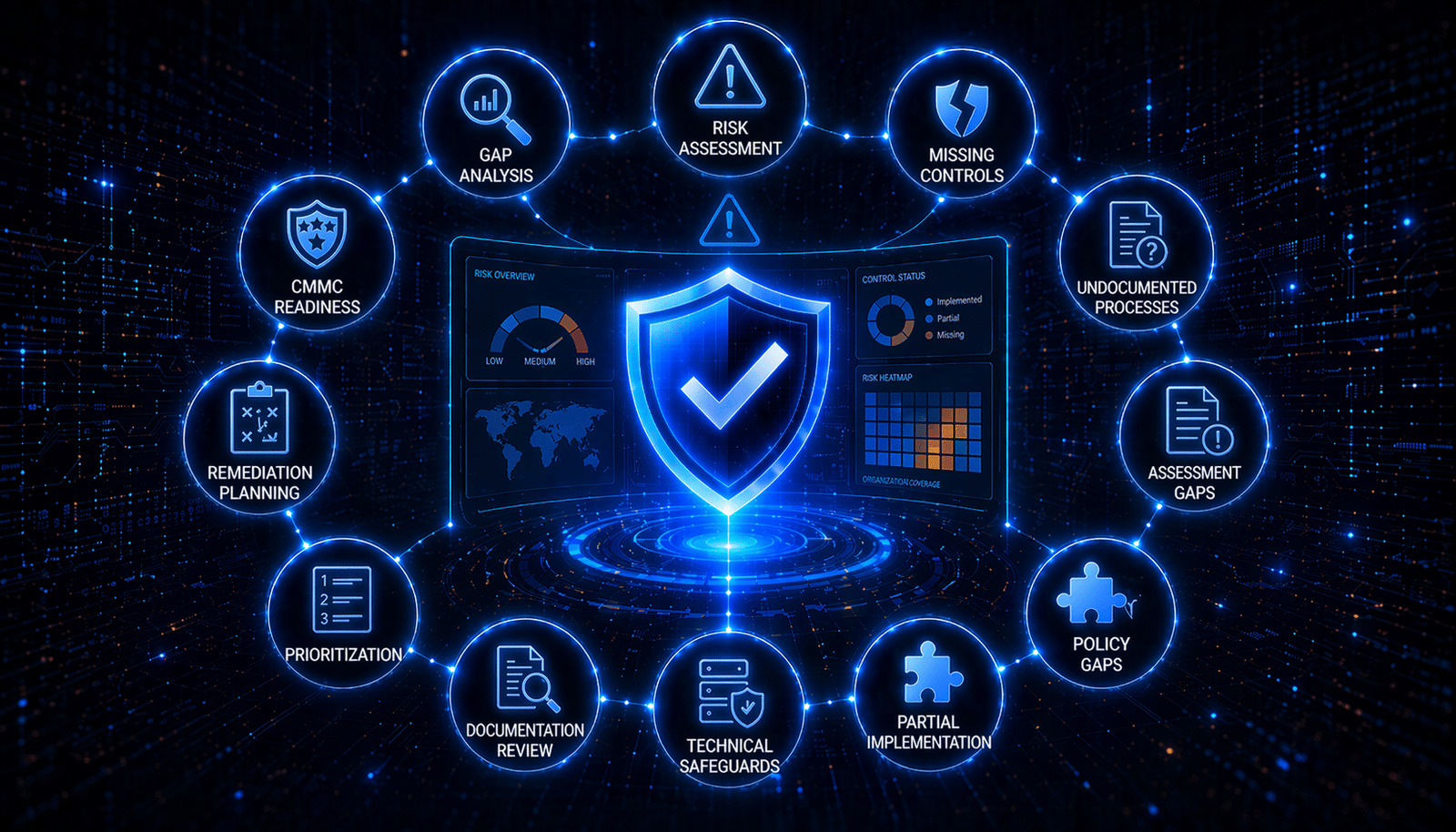

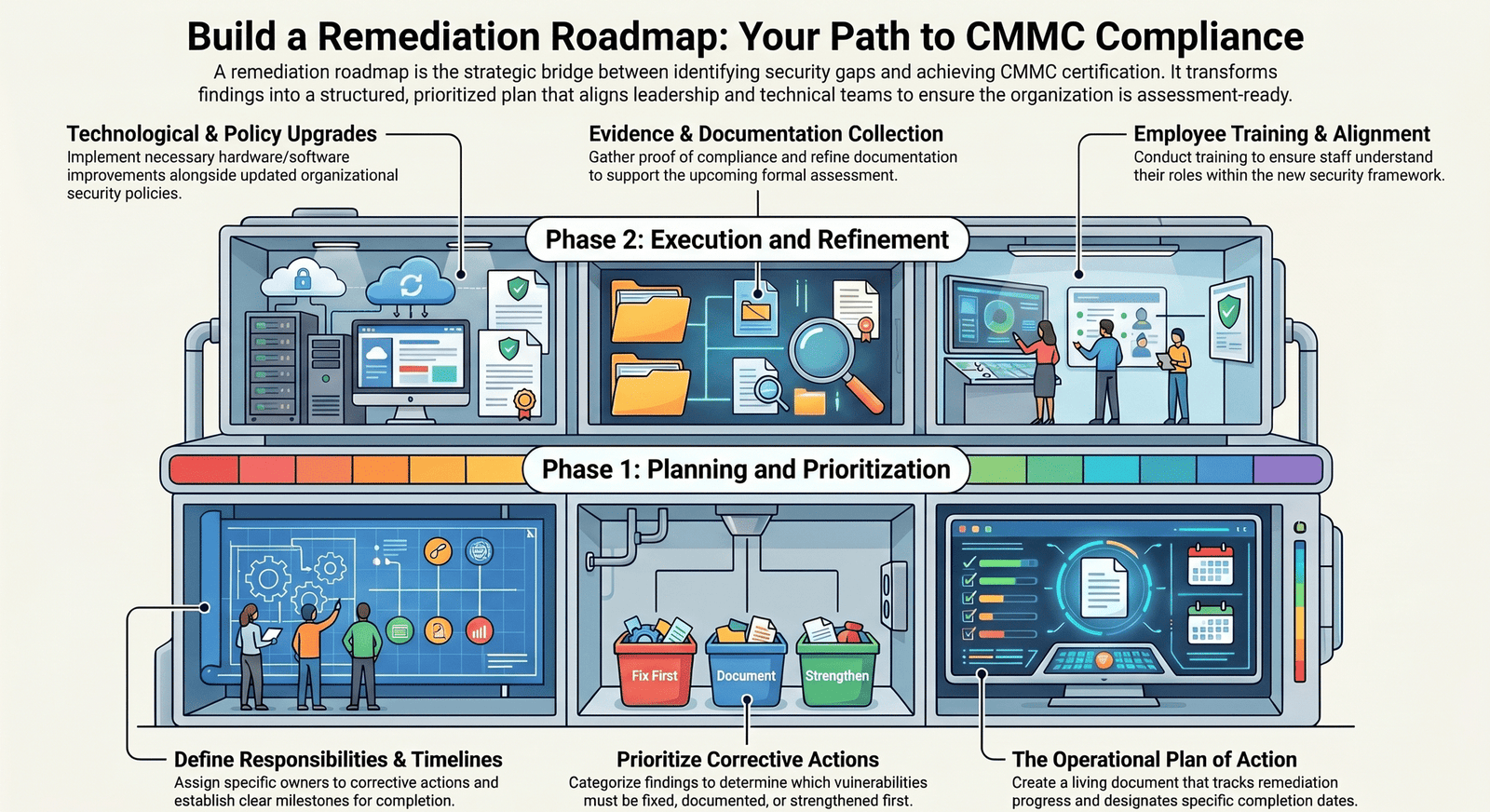
The final step is turning our findings into a practical remediation plan. This means prioritizing corrective actions, assigning responsibilities, setting timelines, and outlining what must be fixed, documented, or strengthened before moving closer to assessment. A good remediation roadmap does not just list problems. It creates a structured path forward that may include technology improvements, policy updates, evidence collection, employee training, and documentation refinement. This step helps leadership and technical teams stay aligned and gives the organization a realistic plan for moving from gap analysis to assessment preparation.

Interested in learning more about CMMC? Visit the Cyber Advisory Center to explore our resources.